1. ALFAwetlands
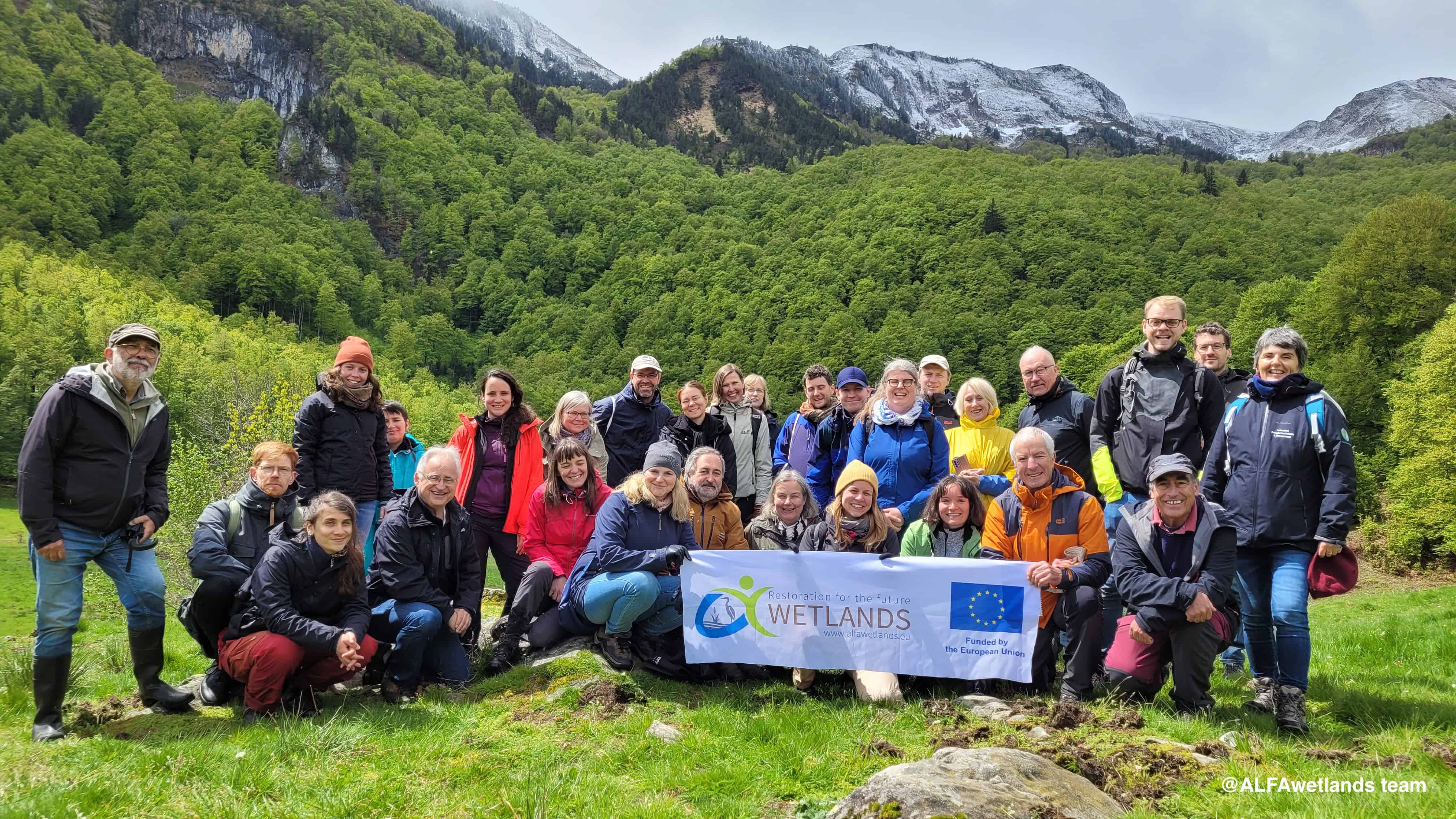
This website is built by ALFAwetlands. ALFAwetlands is funded by the European Union’s Horizon Europe research and innovation program (HORIZON-CL5-2021-D1-01). The ultimate goal of ALFAwetlands is to improve the geospatial knowledge base of wetlands, to evaluate the pathways of wetland restoration that incorporate a co-creation process and to provide information and indicators for sustainability to maximise climate change mitigation, biodiversity and other benefits.
Restoring Europe’s fens, bogs, and floodplains requires a united effort across borders and scientific disciplines. The ALFAwetlands consortium consists of 15 partner organizations from 10 different EU countries, ranging from soil scientists and ecologists to experts in socio-economics. Together, we operate nine “Living Labs” across Europe to develop practical, science-based restoration pathways that benefit both nature and local communities.
2. Aim of this webtool?
The European Union has committed to limiting global warming to 1.5°C under the Paris Agreement. It also aims to become climate-neutral by 2050 and to reduce greenhouse gas emissions by at least 55% by 2030. Achieving these goals requires action across all sectors, including land use and forestry (LULUCF), where wetlands play a key role. Although wetlands cover only about 2% of the EU’s land area, they have a strong capacity to store carbon and help reduce emissions.
ALFAwetlands explores how wetland restoration can support the transition to a climate-neutral and resilient society. The project brings together expertise from environmental sciences, climate science, ecology, social sciences, and economics. The project generates scientific insights on how to restore wetlands in ways that maximise both climate and biodiversity benefits. These insights are relevant across Europe’s wetlands, which cover around 730,000 km², including approximately 350,000 km² of peatlands. However, important knowledge gaps remain. We still need a better understanding of:
- how effective wetland restoration is in reducing greenhouse gas emissions,
- which factors determine successful restoration,
- and how restoration contributes to biodiversity and societal well-being in a changing climate.
To support this, more accurate and harmonised data on European wetlands is needed, including their emissions and the impact of restoration at local, national, and EU levels. This website is one of the key outputs of the ALFAwetlands project. It provides practical guidance for:
- planning and designing wetland restoration projects,
- implementing restoration measures,
- monitoring and evaluation,
- and long-term management after restoration.
We focus on peat habitats within wetlands, peatlands on mineral or more organic soils. The results help policymakers and practitioners identify effective restoration strategies that reduce emissions, protect biodiversity and ecosystem services, and are socially and economically viable. The project also promotes best practices for peatland restoration across Europe.